

You can fill your home with warm, collected Christmas decor for $100 to $200 in one afternoon, and have it look gathered over years instead of bought in one trip. Greenery, warm light, old ornaments, and a few good new pieces do the work. The result is a Christmas that feels personal and calm, not like a store display.
| What you need | Cost |
|---|---|
| Garland, 6 to 9 ft | $20-$40 |
| Wreath | $15-$25 |
| String lights, 2 strands | $6-$12 |
| Ornament set | $15-$35 |
| Candles, 2 to 3 | $10-$20 |
| Stockings, 2 to 3 | $15-$25 |
| Thrift and tabletop finds | $15-$30 |
| Ribbon | $5-$10 |
| Total | $101-$197 |
This budget covers decorations. Start the season at the table, and our green Thanksgiving table shows nine ideas in the same collected style. If you still need a tree, a 6.5 foot pre-lit artificial tree starts around $39 at Walmart, and a tabletop tree costs $5 to $30 at Dollar Tree.
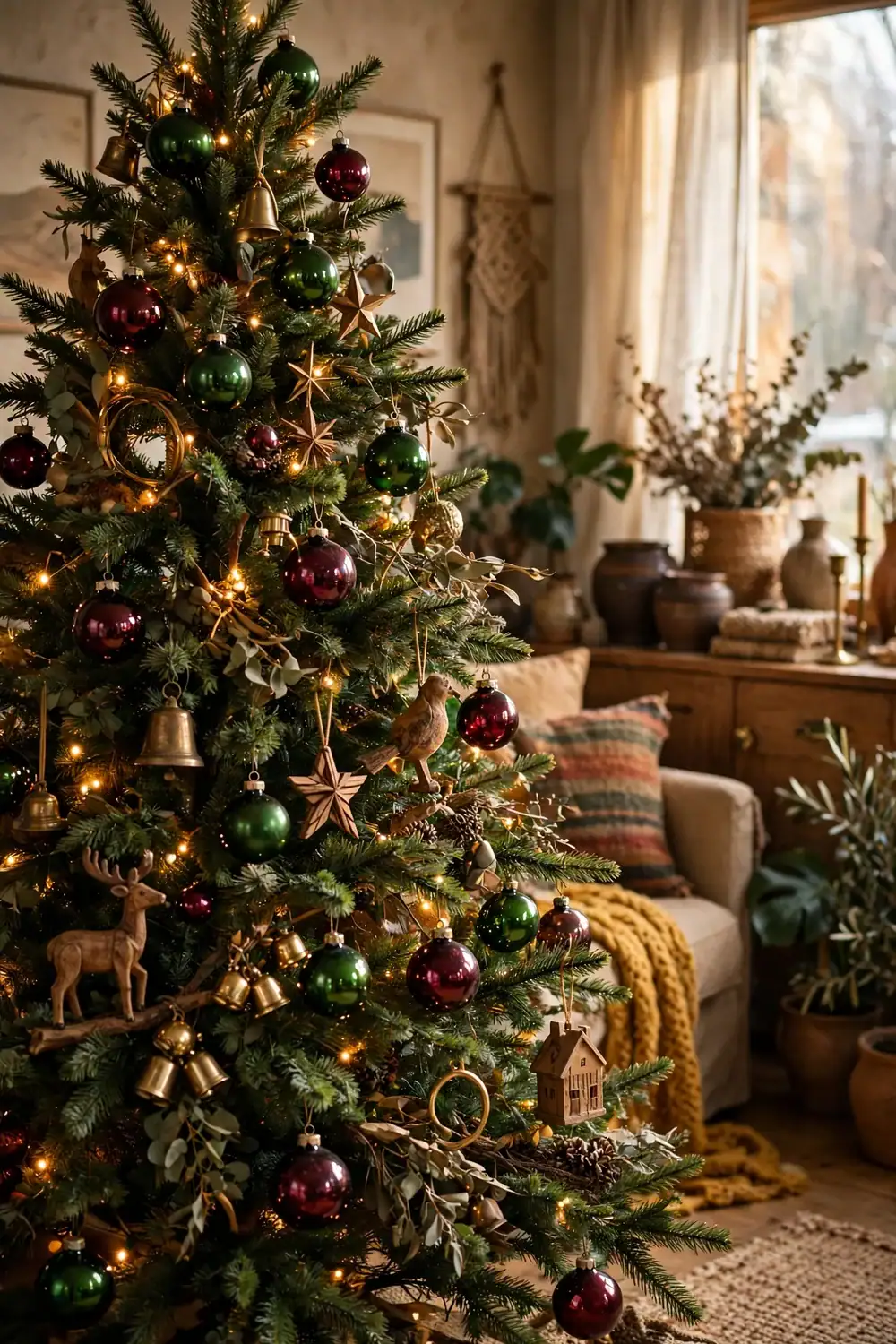
What Makes Christmas Decor Feel Warm Instead of Cluttered?
The difference between warm and cluttered is not how much you have. It is whether everything belongs to the same story.
A warm Christmas has a palette, usually three colors at most. Ours is deep green, warm cream, and one accent: burgundy, brass, or rust. Every decoration fits inside those three colors, so a thrifted ornament, a new candle, and a sprig of greenery all look like they belong together.
A cluttered Christmas has no palette. Red, silver, gold, blue, glitter, and a flashing snowman all compete, and the eye does not know where to rest. It is not more festive. It is just louder.
The second difference is light. Warm Christmas light is low and golden: candles, string lights at 2700K, a lamp in the corner. It glows. Cold white light and flashing modes make a room feel like a shop window. If your lights have a setting, pick steady warm white and leave it there.
The third difference is space. A warm Christmas leaves empty space on purpose. Not every branch needs an ornament. Not every surface needs a decoration. The empty spots are what let the decorated spots shine. If you can see the wall between the garland and the stockings, that is not a gap. That is breathing room.

How Do You Mix Old and New Decorations?
Old and new is the whole point of a collected Christmas. A tree with only new ornaments looks like a catalog. The same collected idea works all year, and our small apartment guide shows how to make any room feel warm and gathered. A tree with only old ornaments can look tired. The mix is what makes it feel like a home.
Start with the old things. The ornaments you have kept for years, the ones from your childhood, the handmade ones, the slightly chipped ones. Put those on the tree first, at eye level, where you can see them. They are the story of the tree. Everything else is decoration around them.
Add new things in the same colors. A new ornament set costs $15 to $35 at Target, and the Wondershop sets are good value. Pick one set in your palette, not three sets in three palettes. New ornaments fill the gaps between the old ones and make the tree look full.
Mix materials, not themes. Glass, wood, paper, fabric, and metal all belong on the same tree. What does not belong is three different themes fighting, like a rustic tree plus a glitter tree plus a beach tree. One tree, one palette, many materials.
Use the new things where they work hardest. New garland goes on the mantel, where it needs to look full and fresh. New string lights go on the tree, where old lights fail. Old ornaments go where people can see them up close. New candles go where they will be lit every night.
If you do not have old ornaments, thrift stores are full of them in November, usually $1 to $3 each. Buy the ones with weight and patina: glass balls, wooden figures, hand painted pieces. In three years, they will be your old ornaments.

What Budget Finds Look Expensive?
Some Christmas decorations look far better than they cost. The same cheap-and-warm trick works outside too, and our second living room guide turns a plain patio into an extra room. These are the ones to buy.
Real greenery. A fresh wreath costs $15 to $25 at Target or a grocery store, and a 6 foot garland costs $20 to $40. Nothing fake looks as good as real pine, cedar, or eucalyptus, and the smell does half the work. If you have a yard, cut a few branches yourself and tuck them into a plain garland to make it look full. A $20 garland plus free cuttings looks like a $50 garland.
Taper candles and brass holders. A pair of taper candles costs $5 to $10, and thrifted brass holders cost $2 to $5 each. Candles on the dining table are the single most effective Christmas decoration for the money. They cost almost nothing, and they make dinner feel like an occasion.
A good ribbon. One spool of wired velvet ribbon in burgundy or forest green costs $5 to $10. Tie it on the wreath, on the garland, on the stair rail, and on the gifts. The same ribbon in four places ties the whole house together, and it looks far more expensive than it is.
Glass ornaments in one color. A set of glass balls in deep green or burgundy, $15 to $25, catches the light in a way plastic never does. Put them where the light hits: near a lamp, near a window, on the top half of the tree.
A simple stocking. Wool or linen stockings in cream or red cost $5 to $10 each at Target, and they look better than the glittery ones that cost three times as much. Hang them in a row with space between them, not bunched together.
The rule is the same as the rest of the year. Buy the material, not the brand. Real greenery, real glass, real brass, and real candlelight always look expensive, because they are real.

How Do You Decorate a Small Space for Christmas?
Small spaces need a smaller Christmas, not a smaller feeling.
A tabletop tree. A 2 to 3 foot tree on a side table or a console costs $5 to $30 and holds a dozen ornaments. It gives you a tree without giving up your floor. Put it where you sit in the evening, not in the corner where nobody looks.
One garland, one wreath, one strand of lights. That is the whole decoration for a small apartment, plus the tree. Garland on the mantel or the top of a bookshelf. Wreath on the door. Lights in the window. Three things, three places, done. Anything more starts to crowd the room.
Decorate up, not out. In a small room, the walls and the windows are your space. Hang ornaments from a branch in a vase. Put lights around the window frame. Hang the wreath at eye level where you see it every day. Keep the floor and the tables clear, because a small room needs its surfaces more than a big one does.
Use the windows. A strand of warm lights in the window is visible from inside and outside, and it costs $3 to $6. It is the best decoration per dollar in a small apartment, and it makes the room glow after dark.

The Table Is the Center
If you only decorate one place well, make it the dining table. That is where Christmas actually happens.
A linen tablecloth in cream or deep green costs $20 to $40. A runner down the middle, greenery laid flat along it, taper candles in brass holders, and plates you already own. That is a Christmas table. You do not need a centerpiece from a store. A row of oranges, a few pinecones, and a sprig of eucalyptus down the middle of the table costs about $10 and looks like you planned it for weeks.
Set the table the night before, even if dinner is tomorrow. A set table makes the whole house feel ready, and it gives you something beautiful to look at while you cook.

FAQ
How much should I spend on Christmas decorations?
$100 to $200 covers a full warm Christmas: garland, wreath, lights, ornaments, candles, and stockings. The trick is to buy a few good things each year instead of everything at once. In three years, you will have a collected Christmas that cost less than one big shopping trip.
When should I start decorating for Christmas?
The weekend after Thanksgiving is the traditional start, and it gives you a full month to enjoy it. If you love Christmas, the first weekend of November is fine too. Decorating early is better than decorating late, because you get more days out of the same money.
How do I store decorations so they last?
Wrap ornaments in tissue paper, not newspaper, which can stain. Keep string lights wrapped around a piece of cardboard so they do not tangle. Store everything in one labeled box in a dry place. Good storage is why some ornaments last twenty years and others last one.
What do I do with decorations I no longer love?
Donate them in November, when thrift stores need them most. Someone else’s collected Christmas starts with your old ornaments, and your shelves get the space back. Keep only the pieces with a story or a memory attached.


Christmas does not need to be big to be warm. It needs greenery, warm light, a few old things you love, and a table set for the people you love. Buy the garland, light the candles, hang the stockings with space between them, and let the room be calm. That is a collected Christmas, and it is enough.