

You can set a green Thanksgiving table that looks elegant and collected for $100 to $200 in one afternoon, without buying a matching set of anything. Deep green, brass, amber glass, and fruit do the work. The result is a table that looks gathered over years, not ordered from one catalog.
| What you need | Cost |
|---|---|
| Linen tablecloth, dark green | $20-$40 |
| Runner, second pattern | $12-$25 |
| Taper candles and holders | $10-$20 |
| Mismatched plates, thrifted | $12-$25 |
| Amber and green glasses | $12-$25 |
| Cloth napkins | $8-$15 |
| Greenery and fruit for the centerpiece | $12-$20 |
| Place cards | $5-$8 |
| Total | $91-$178 |
What Is the Grounded Greens Palette?
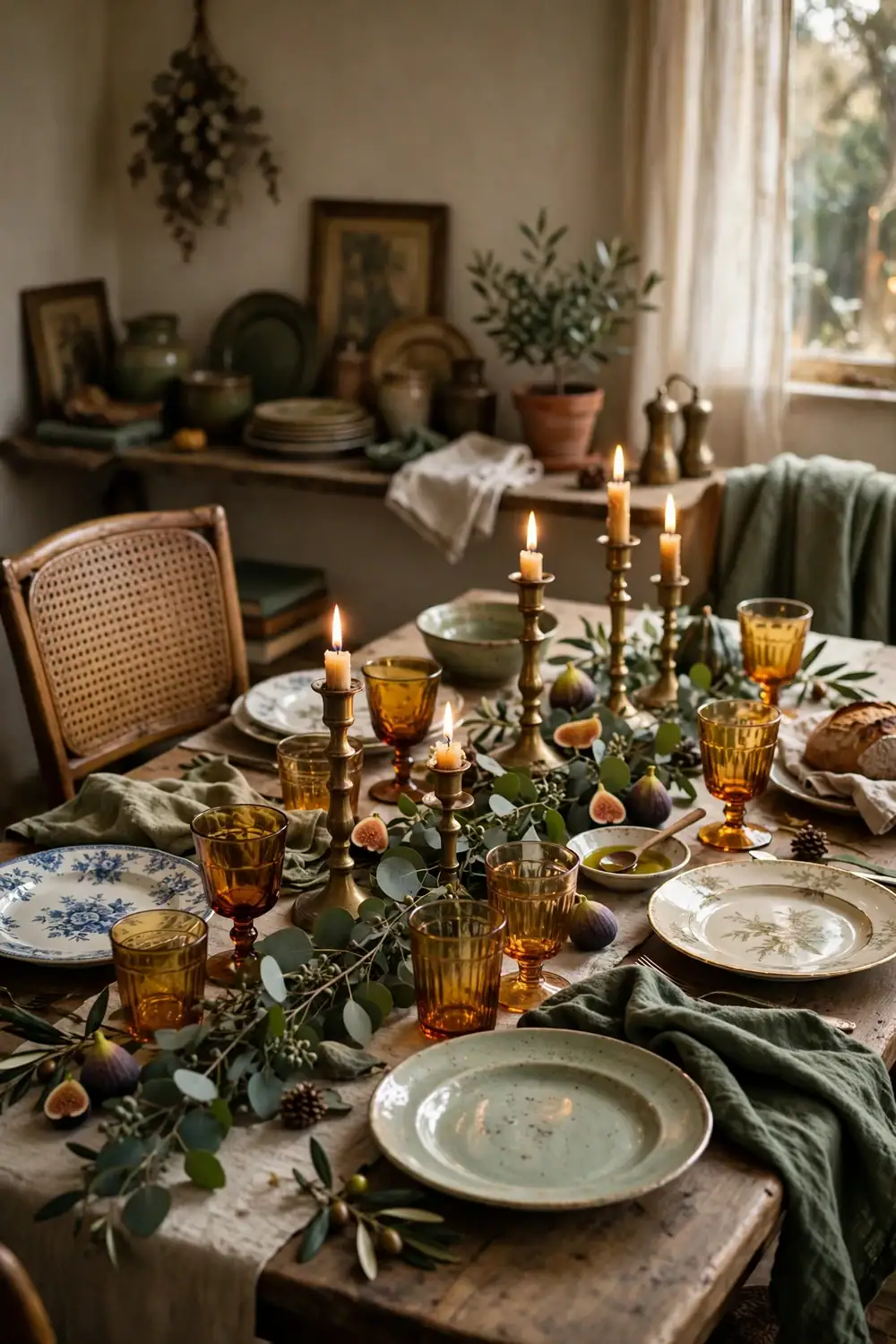
Grounded Greens is the Thanksgiving palette of 2026. Deep forest green, olive, moss, sage, and eucalyptus, warmed up with brass and amber glass. It is the color of late November: the last green leaves, the dark trees, the low sun.
It works because it is a palette from nature, not from a store. Green is the base. Brass adds warmth. Amber glass adds glow. Cream keeps it from getting too dark. The palette works beyond the holiday, and our dining room corner guide shows how to make a real dining spot in a living room. Nothing on the table needs to match exactly, because all of these colors already go together outside.
Compare it with the old Thanksgiving palette, orange and brown, which can look flat and heavy. Green feels fresher and more grown up, and it carries straight into Christmas without changing a thing. Keep the green up and our warm Christmas guide shows how the same collected style carries through December. Set this table for Thanksgiving, swap the pumpkins for pinecones, and it is your Christmas table too.
How Do You Layer Three Patterns Without Chaos?
Print maxxing is the tablescape trend of 2026: layering three or more patterns in one palette. It sounds chaotic. Done right, it looks collected and expensive. Collected is a whole style, not just a table, and our small apartment guide shows how to build it room by room. The trick is that the patterns share colors, not shapes.
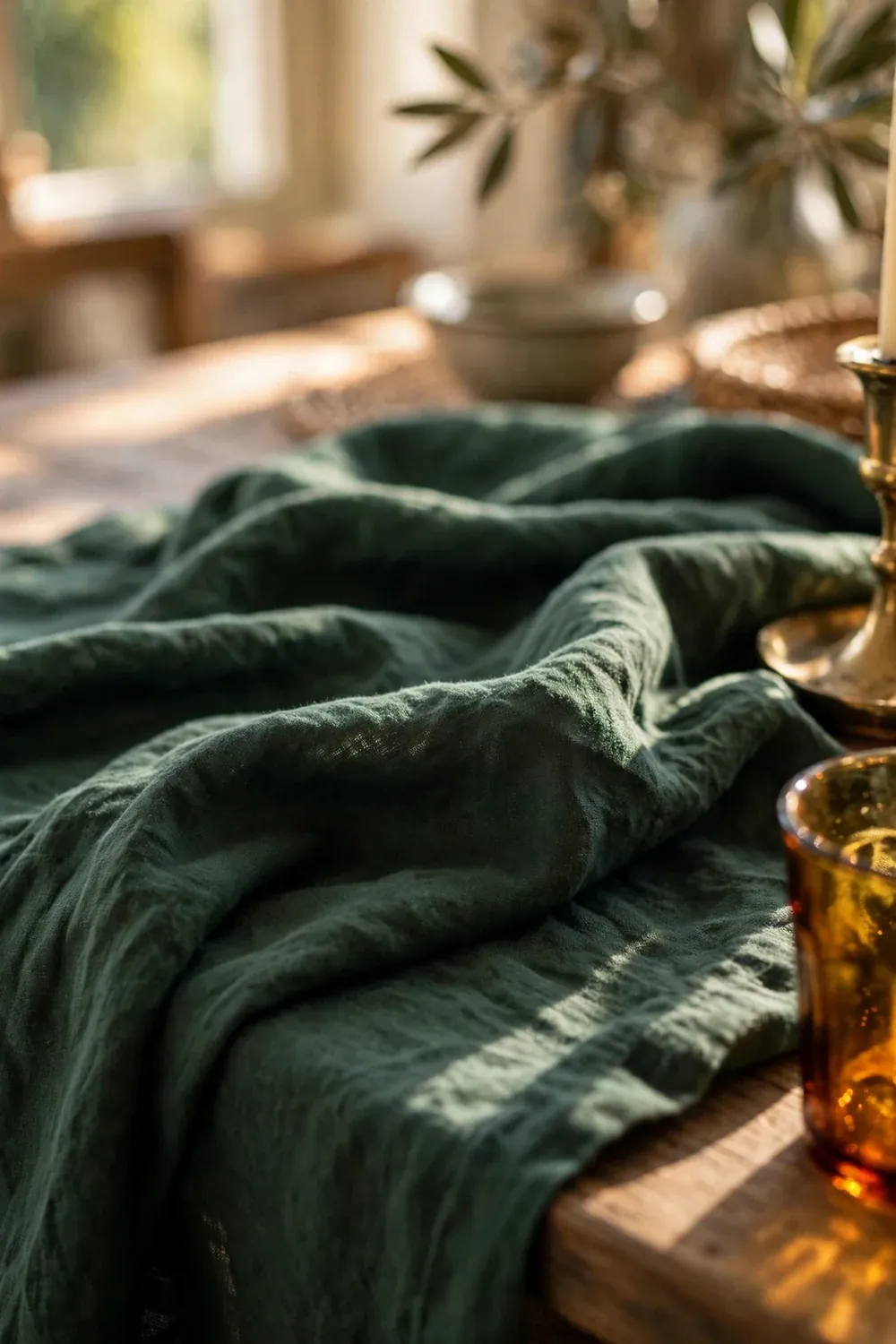
One big pattern, one small pattern, one solid. The tablecloth is the big pattern, a wide stripe or a large leaf print in deep green. The runner is the small pattern, a narrow check or a tiny floral in green and cream. The napkins are solid, sage or cream. Three layers, three scales, one palette. The eye reads it as rich, not busy.
Repeat one color in every layer. Pick forest green and make sure it appears in the tablecloth, the runner, the plates, and the napkins. That repeated color is the thread that holds the layers together. Without it, the patterns fight. With it, they look like they were chosen together.
Leave one thing plain. If the tablecloth and runner are both patterned, the plates should be mostly solid, or the glasses should be plain amber. One plain element gives the eye a rest. A table where everything is patterned has nowhere to look.
Test it before the day. Lay the tablecloth and runner on the table a week before Thanksgiving and put one place setting on top. Look at it from the doorway. If it looks layered and calm, it is right. If it looks busy, remove one pattern. It is always easier to take one layer away than to add one at the last minute.

9 Ideas for a Green Thanksgiving Table
1. Start with a dark green linen tablecloth. Linen is the right fabric for this table. It wrinkles softly, it looks better after a wash, and it holds a deep green better than cotton. A dark green linen tablecloth costs $20 to $40 and sets the whole palette. If you do not own one, a flat bed sheet in forest green works just as well and costs less.
2. Layer a runner in a second pattern. A runner down the middle in a small check, a stripe, or a leaf print, in green and cream, adds the second pattern. It should be narrower than the table and longer, hanging a few inches over each end. A runner costs $12 to $25, and a strip of fabric from a craft store works the same way.
3. Use mismatched china. Nobody buys a twelve piece set anymore, and that is good news for this table. Mix green transferware, cream stoneware, and one or two patterned plates from a thrift store. Thrifted plates cost $1 to $3 each, and a table of twelve different plates in the same palette looks collected, not careless. Put the most interesting plate at each end of the table, where people notice it.
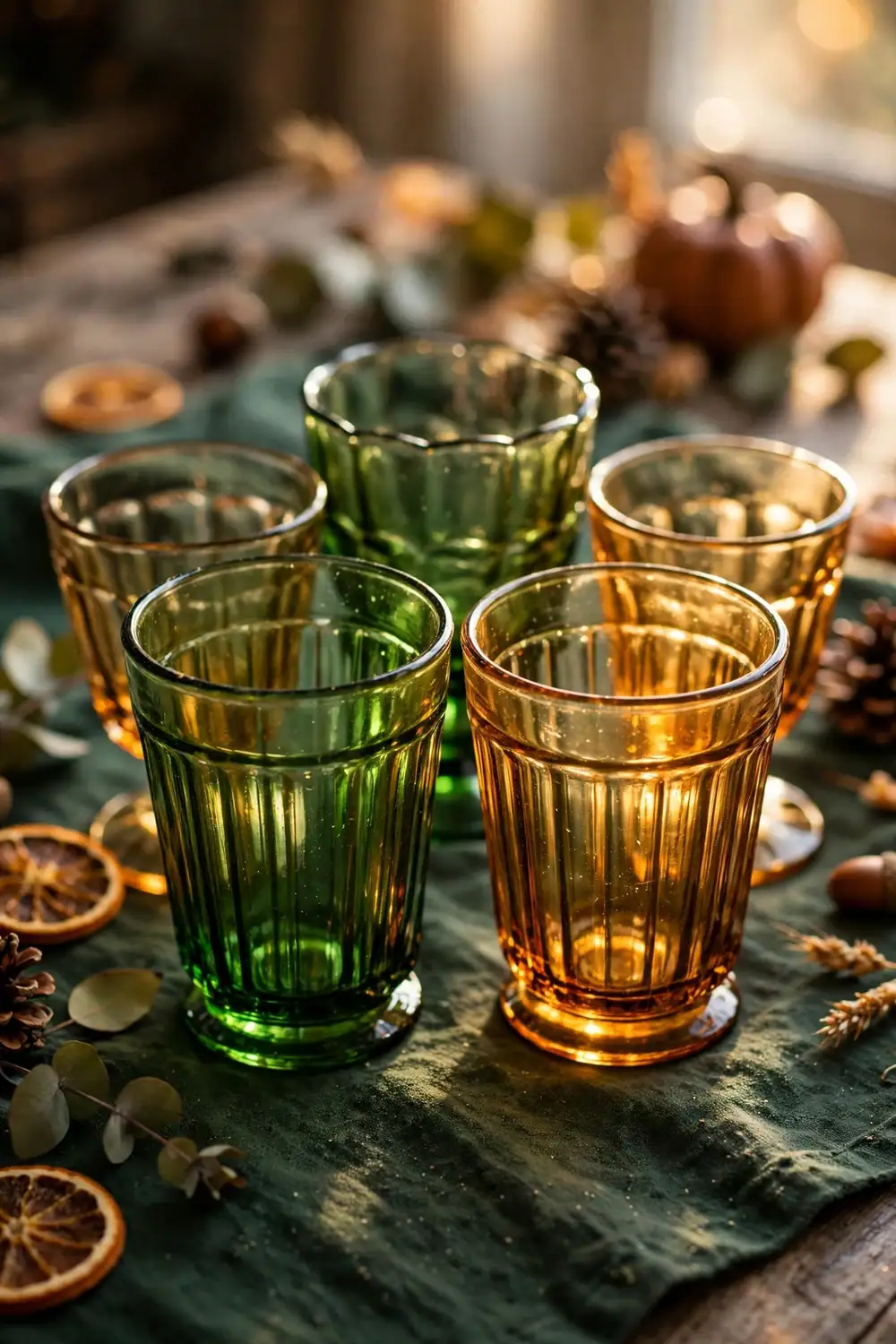
4. Pour into amber and green glass. Amber glass glows in candlelight, and green glass looks like it came from an old apothecary. Mix them: amber water glasses, green wine glasses, or the other way around. Thrift stores sell them for $1 to $2 each. Two colors of glass on one table look intentional. One color looks like a set.
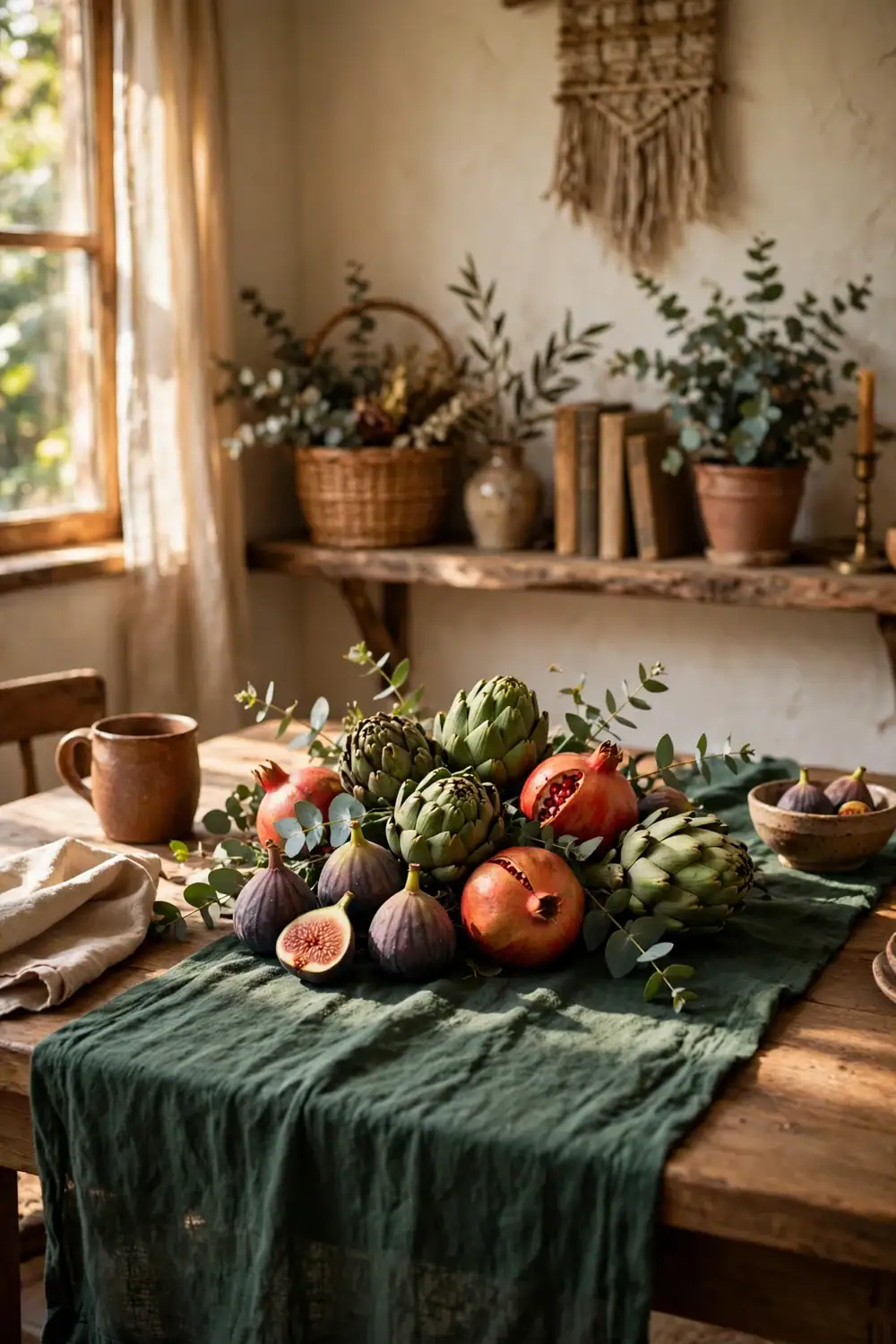
5. Build the centerpiece from fruit. Figs, pomegranates, artichokes, and pears, piled down the middle of the table on the runner, cost $12 to $20 at a grocery store. They are the most beautiful centerpiece you can buy, because they are real food in real colors. Cut one pomegranate open and let the seeds show. Tuck eucalyptus sprigs between the fruit. Guests can eat the centerpiece, which is more than you can say for a floral arrangement.
6. Run eucalyptus and taper candles down the middle. A garland of eucalyptus, real or faux, costs about $10, and taper candles in cream or sage with brass holders cost $10 to $20. Lay the eucalyptus flat along the runner, put the candles at intervals, and light them before guests sit down. The combination of green, flame, and brass is the whole look in one line down the table.
7. Put a cloth napkin and a sprig on every plate. Cloth napkins cost $8 to $15 for a set, and they make the table feel finished in a way paper never does. Lay one on each plate with a sprig of rosemary or eucalyptus on top. It costs almost nothing, it smells wonderful, and it tells every guest that someone thought about their place.
8. Write place cards on a leaf or a small fruit. A name written on a bay leaf, a small pear, or a folded card costs $5 to $8 total. Place cards are the oldest trick for making a table feel considered, and they solve the seating problem before anyone has to ask where to sit.
9. Add one brass thing per person. A brass napkin ring, a brass candle holder, a small brass dish for salt. Brass is the warm metal in this palette, and a little of it at every place setting ties the table together. Thrifted brass costs $1 to $3 a piece. One brass thing per person is enough. More than that starts to look like a brass collection, not a dinner table.
What Goes on the Table (and What Stays Off)?
On the table: plates, glasses, napkins, candles, greenery, fruit, and place cards. That is all. Everything else stays off.
Serving dishes stay on a sideboard or a kitchen counter. A crowded table with serving bowls in the middle leaves no room for elbows, and nobody can see the person across from them. Set up a buffet on a side table and let people serve themselves.
Phones stay in a basket by the door. Not as a rule, just as an offer. A basket by the door with a note that says phones sleep here is the kindest way to get a table full of people looking at each other.
One decoration per person is enough. A table with nine ideas on it already has plenty to look at. Resist the urge to add the extra thing on Thanksgiving morning. The table is done. Go cook.

How Do You Make It Last Into Christmas?
This table was built to last. The palette, deep green, brass, amber, and cream, is a Christmas palette too.
Swap the fruit. Take the figs and pomegranates off after Thanksgiving and replace them with pinecones, oranges, and a few sprigs of pine. Same runner, same candles, same glasses, same plates. The table becomes a Christmas table with one grocery trip and ten minutes of work.
Swap the place cards. Bay leaves become small pine sprigs. The napkins stay. The brass stays. The only thing that changes is the season on top of the table, not the table itself.
That is the real value of a grounded palette. It is not a Thanksgiving table or a Christmas table. It is a late autumn table, and late autumn lasts from November into December. Buy the pieces once, use them for six weeks, and put them away knowing they will work again next year.
FAQ
What colors go with a green Thanksgiving table?
Brass, amber, cream, and warm wood. Avoid bright orange and red, which push the table back toward the old Thanksgiving palette and fight the green. If you want a warm accent, use rust or burgundy in small doses, like a ribbon or a candle.
Do the plates have to match?
No, and they should not. Mismatched china in the same palette, greens, creams, and one pattern, looks collected and personal. Matching sets look like a showroom. Thrift stores are the best source, $1 to $3 a plate.
How do I keep the table from looking too dark?
Cream napkins, cream candles, and amber glass keep a dark green table bright. Put the candles in the middle where the light hits the glass, and leave the overhead light low. The table should glow, not glare.
Can I use this table for a small Thanksgiving?
Yes, and it works better small. A table for four needs one runner, four place settings, and a short line of fruit and candles down the middle. The same nine ideas apply, just fewer of each. A small table set with care feels more special than a big table set in a hurry.
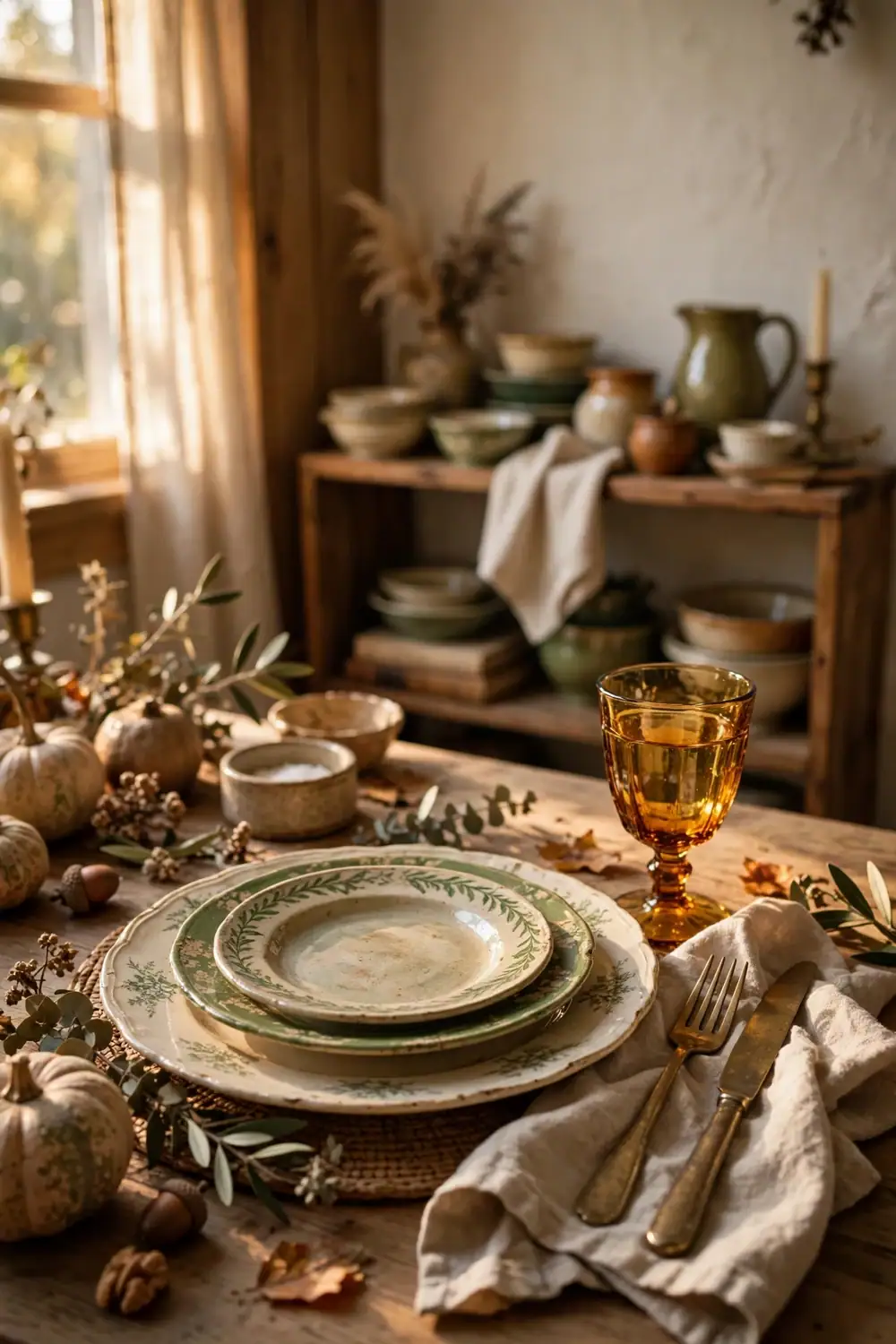

A green Thanksgiving table is not about buying a new set of dishes. It is about a palette from nature, patterns that share a color, and a centerpiece you can eat. Set it the night before, light the candles, and sit down. The table is ready, and so are you.